PhD at DTU Aqua
The PhD programme at DTU Aqua educates future researchers within the institute's research areas for a career in academia or business.
PhD students and projects at DTU Aqua within the research area Ecosystem based Marine Management.
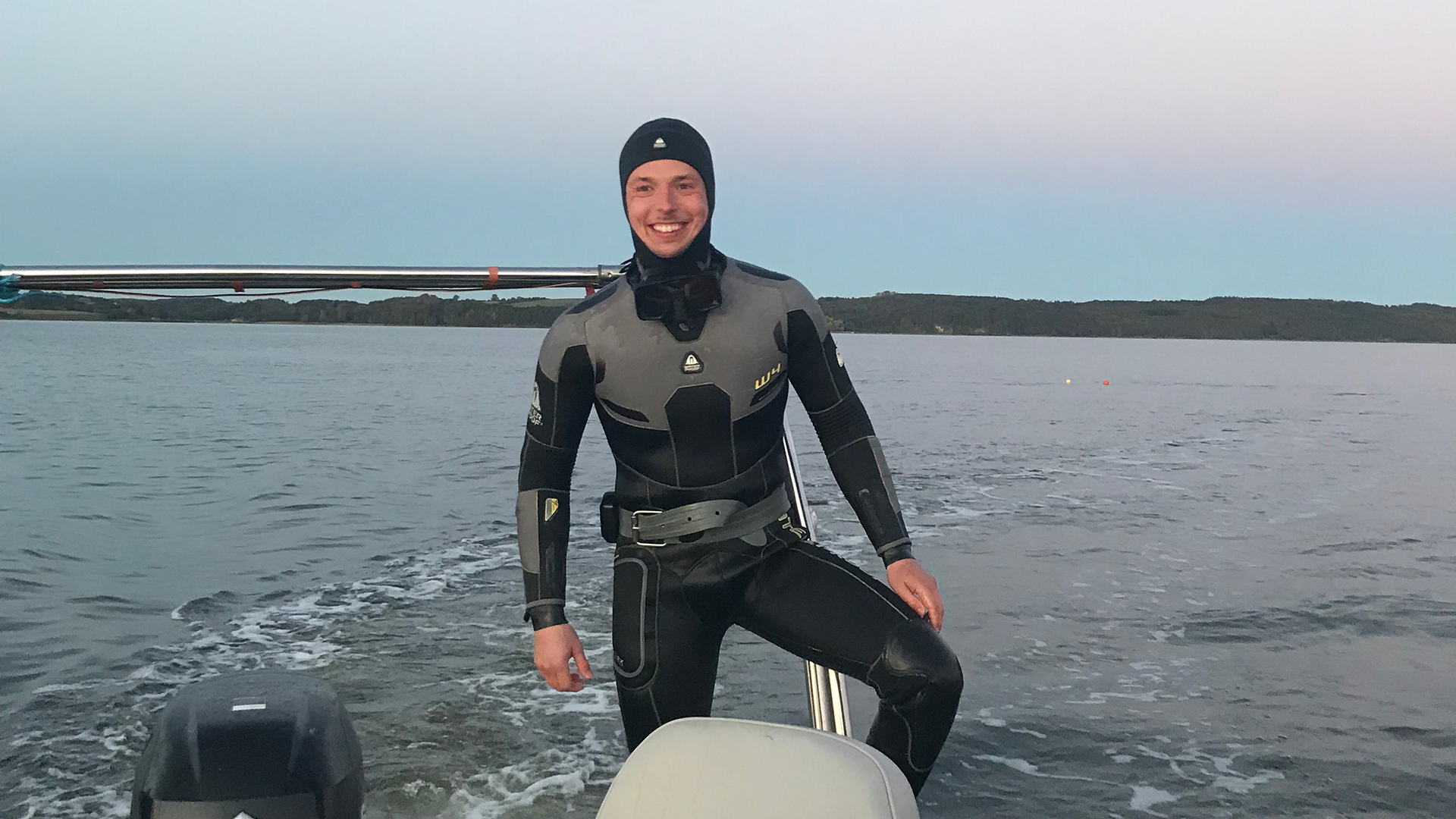
Title of the PhD project
Rewilding marine coastal ecosystems – fish community dynamics in transplanted eelgrass habitats
Background of the project
Anthropologically induced effects such as eutrophication and hypoxia in marine coastal environments are today widespread and often severe, resulting in habitat loss, reduced biodiversity and trophic cascades. Loss of important habitats can delay or hinder the recovery and integration of fish populations into the ecosystem. Restoration and transplantation of habitats such as eelgrass meadows have proven successful in terms of promoting taxonomic biodiversity and abundance of slow-moving marine fauna. By reintroducing these habitat types to the ecosystem, complex three-dimensional structures may provide refuge as well as foraging opportunities for invertebrates, fish and other organisms, forming biodiversity hotspots. However, knowledge of the effect on community dynamics, behaviour and biodiversity of fish in these environments, remain insufficient.
About the project
The objective of this PhD project is to study the fish community dynamics in relation to the coastal habitats such as transplanted- and naturally occurring eelgrass. The potential re-colonisation of fish communities associated with the transplantation of eelgrass will be investigated with a strong emphasis on the roles of top- and mesopredators. With public collaboration together with recreational anglers, continuous monitoring of degraded areas is carried out whilst evaluating ecosystem function of eelgrass- and stony reef habitats.
Perspectives
The PhD project contributes to a deeper understanding of the biodiversity and community dynamics, including predator-prey interactions and habitat preferences, of marine fish in shallow coastal waters, with the hopes of contribute to improving rewilding efforts in restored marine areas. The project will also critically assess various underwater monitoring methodologies commonly used to assess fish, in a complex coastal ecosystem, as well as involving local anglers and volunteers.
Supervisors
Mikael van Deurs, Ole Henriksen and Christian Skov, DTU Aqua

Title of the PhD project
Cormorant and seal predation on fish in inner Danish waters
Background of the project
Many species are struggling in the inner Danish waters compared just 50 years ago, and some of our previously most important fisheries there have declined or even closed. These fish stocks have been subject to several different stressors, i.e., overfishing, food scarcity, parasites, oxygen depletion, predation, etc. For mitigation efforts to be successful, it is essential to disentangle the effects of the stressors, and especially understand the natural components. One of these is predation from seals and cormorants, which have both increased dramatically since the 1970’s.
About the project
My project aims to quantify the natural mortality of cod, herring, and various flatfish due to seals and cormorants, both in the current situation and historically. This is achieved through a combination of empirical diet data from the predators, and modelling approaches. The diet data are acquired from otoliths in seal scats and cormorant pellets, and the modelling framework includes a stochastic stock assessment model, and a spatiotemporal species distribution model. The culmination of the project is a management strategy evaluation, where I will investigate the effects of different seal and cormorant management scenarios.
Perspectives
This project will increase our understanding of predators’ role in the recovery process of deteriorated fish stocks, and enable informed decision-making on management of conflict species. Furthermore, as numerous fish stocks worldwide are in poor condition and human-wildlife conflicts occur everywhere, results from this project can inspire managers all over the world. Lastly, the project will also contribute to the ongoing efforts of developing methods for including good estimates of natural mortality in fish stock assessments.
Supervisors
Nis Sand Jacobsen, Lotte Kindt-Larsen and Niels Jepsen, DTU Aqua
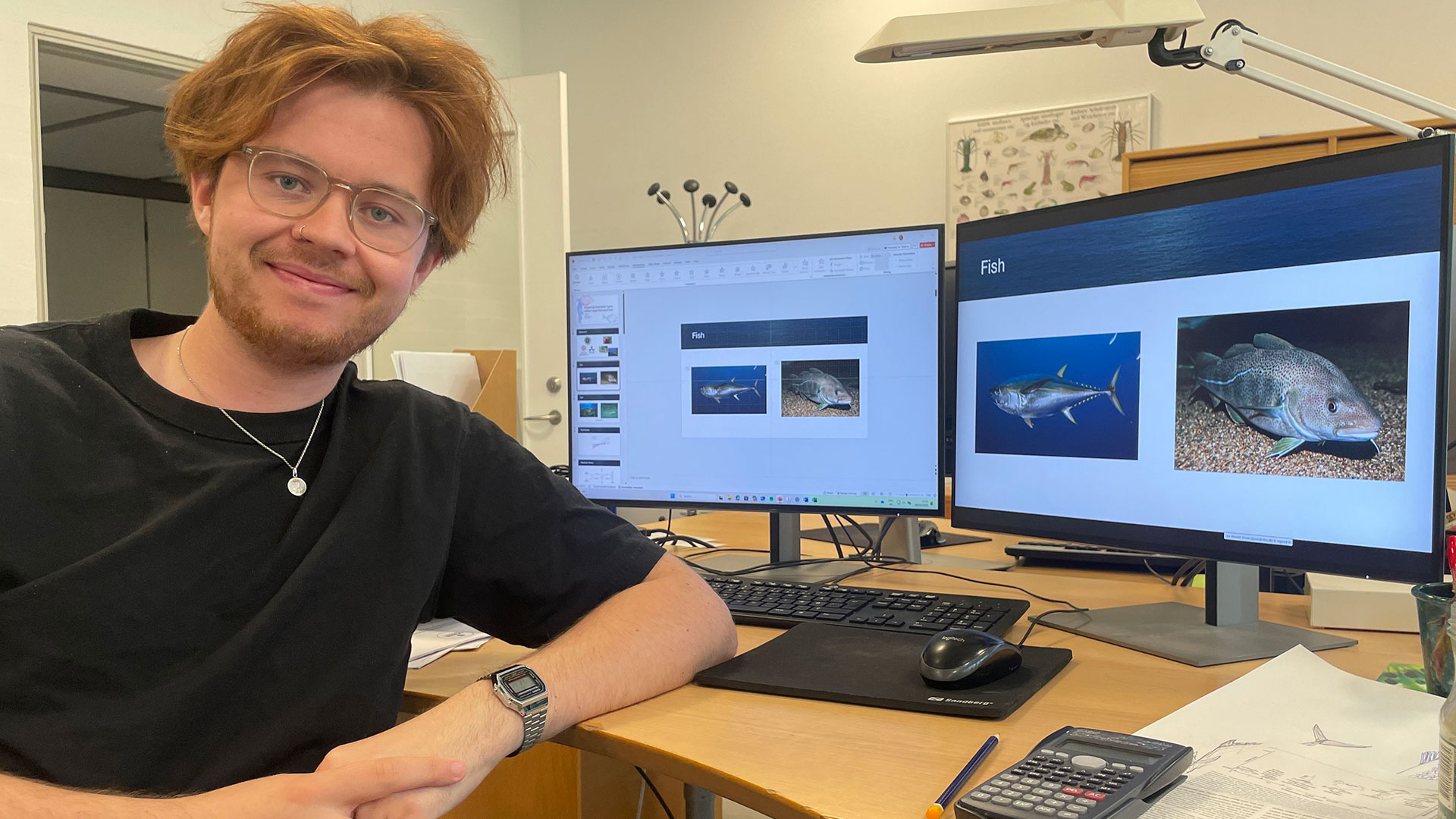
Title of the PhD project
Challenging the fish growth paradigm in a changing climate
Background of the project
How growth varies between organisms is of special interest in the context of climate change as we hope to anticipate changes to ecosystem structure and function, following previously established associations of biological rates and environmental variables. Typically, one would expect an organism to grow at a faster rate in warmer waters. This has been shown to occur both intra- and interspecifically. Recent work has shown that this is not in fact the case for large demersal fish, predators that live on the sea floor on continental shelves. If this group of organisms doesn’t play by the same rules as others, what impacts could that have on global marine ecosystems?
About the project
The aim of this project is to create a framework where the dynamics of growth in large demersal fish can be more accurately represented in global ecosystem models. To do this I will use morphological data to identify differences in demersal species across a range of temperatures to demonstrate niche differences. Using these relationships, I will work with an existing trait-based food-web model and incorporate the different strategies of large demersal fish which will elucidate more realistic ecosystem dynamics.
Perspectives
This project will provide insights into how large demersal fish, a functional group with great commercial interest, grow across latitudes and potentially respond to warming. Improving our understanding of this process is vital to effective management of coastal shelf marine ecosystems.
Supervisors
P. Daniël van Denderen and Martin Lindegren, DTU Aqua

Title of the PhD project
Modelling the pace of life of marine fish
Background of the project
Fish are constantly interacting with other fish and with their environment; that shapes how different fish feed, grow, reproduce, and survive – and even how they look like. Fish community models translate these interactions to mathematical equations to estimate trophic links, community structure and biomass.
Trait-based approaches model individuals instead of species by identifying a few dominant traits and trade-offs that characterize the “average” fish. Body size is the primary trait in most models because several traits scale with it (e.g. metabolism, maximum consumption) and because it serves as a proxy for trophic level in marine systems – where the general rule of “big eats small” applies. However, body size is not enough to explain the diversity of marine fish…
About the project
This project will investigate what explains marine fish diversity beyond body size. Our candidate is pace of life: a qualitative measure of the rate at which an individual progresses through life. It has been correlated with both physiological and life-history traits and can be described by trade-offs between growth, reproduction and survival.
My hypothesis is that adding pace of life as a secondary trait can improve the mathematical representation of marine fish in the size- and trait-based fish community model, FEISTY.
Perspectives
Fish community models directly depend on the quality of current knowledge on fish physiology and ecology. If my hypothesis is confirmed, it will improve the forecast of fish community biomass and re-assembly on a global scale, and contribute to the study of past, present and future scenarios under climate change and fishing pressure, among other applications.
Supervisors
Daniël van Denderen and Ken Haste Andersen, DTU Aqua

Title of the PhD project
Marine fish habitats in Denmark
Background of the project
Knowledge of data-limited fish species is essential for ensuring effective and sustainable marine management. These species are often overlooked in traditional fisheries assessments because they are not commercially targeted, occur at low abundances, or appear only sporadically as bycatch. Consequently, their population trends, life-history traits, and ecological roles remain poorly understood, increasing the risk that declines go unnoticed until they become severe or irreversible. This knowledge gap is particularly important in the North Sea, a region of major economic and cultural significance for Danish fisheries. The North Sea supports valuable commercial stocks such as cod, plaice, sole, herring, and sandeel, forming the basis of key fisheries and industries. Its high productivity, driven by nutrient-rich waters and diverse habitats, makes it one of the most important fishing grounds for Denmark.
About the project
The objective of this PhD project is to investigate key fish habitats associated with data-limited species in the North Sea. It also aims to improve understanding of ecological linkages between coastal and offshore environments for these species.
The project will integrate diverse datasets, including trawl surveys, commercial catch and bycatch records, habitat data, citizen science observations, and environmental variables. This work will involve managing complex data sources and collaborating with biological and technical experts to identify patterns in fish distribution and habitat use.
Perspectives
The project will generate new insights into fish habitat use and species distribution, supporting improved marine spatial planning and conservation. The findings will contribute to the designation and management of marine protected areas and support broader biodiversity targets, while also strengthening the scientific basis for managing data-limited species in the future.
Supervisors
Mikael van Deurs and Elliot Brown, DTU Aqua
Presentation of the PhD project will follow.
The PhD programme at DTU Aqua educates future researchers within the institute's research areas for a career in academia or business.
Katrina Bromhall
The effect of modified and lightweight fishing gears on benthic macrofauna
Isabella Kratzer
Gillnet modifications to reduce bycatch of harbor porpoises
Gildas Glemarec
Bycatch of seabirds in Danish gillnet fisheries – assessing scale and testing mitigation
Elliot John Brown
Habitat Suitability for Juvenile Flatfish of the Inner Danish Waters
Louise Dahl Kristensen
The importance of habitat structure for the distribution and behaviour of demersal fish
Lotte Kindt-Larsen
Management of fisheries in harbour porpoise (Phocoena phocoena) marine protected areas
Teunis Jansen
North Sea Mackerel or Mackerel in the North (Sea)?