New Head of Section Focuses on the Opportunities Offered by Dana V and Time for Research Strategy
He was fascinated by bacteria while studying chemical engineering at DTU, and he became involved in ocean science almost by chance when he moved to universities in the United States and built a life there. Since then, the oceans have become his professional calling, and now he is back at DTU. Meet Professor Adam Martiny, the new Head of Section for Ocean Science and Technology.
American Hierarchies and Danish Collaboration
After completing his PhD at DTU in 2003, Adam Martiny received a postdoctoral fellowship at MIT in the United States. He subsequently joined the University of California as a Professor of Earth System Science.
You come from a more hierarchical American university system. What do you see as its advantages?
“One of the great advantages is that young researchers are given responsibility very early in their careers in the United States. I was around 30 when I established my own research group. I had just completed my postdoctoral training and was given the opportunity to recruit staff and build my own research programme. That was actually one of the main reasons I moved to the United States. It is a culture that invests heavily in young talent.”
What, then, do you see as the strengths of the Danish model?
“In the United States, research groups can become very independent. That creates strength, but it can also create silos.
“When I was at MIT, for example, I found that groups could be quite separate from one another. In Denmark, it is often easier to collaborate across disciplines. If frictions or academic disagreements arise, the system is less rigid. There is greater flexibility.”
We Must Make It Easier to Get Started if We Want to Attract the Best
Drawing on his experience in the United States and his fresh perspective on the Danish university system, Adam Martiny highlights the risk of losing talented people simply because the path to independence can become too complicated.
“We need to be careful not to lose specialists in our commitment to interdisciplinary collaboration. Denmark invests heavily in research, and there is substantial research funding available. However, the system can be difficult for younger researchers to navigate,” he says.
“I believe we could be more deliberate in recruiting young research talent and make the career path more transparent. If we want to attract the very best, we need to make it easier for them to get started.”
From Bacteria in Drinking Water to Biodiversity in the World’s Oceans
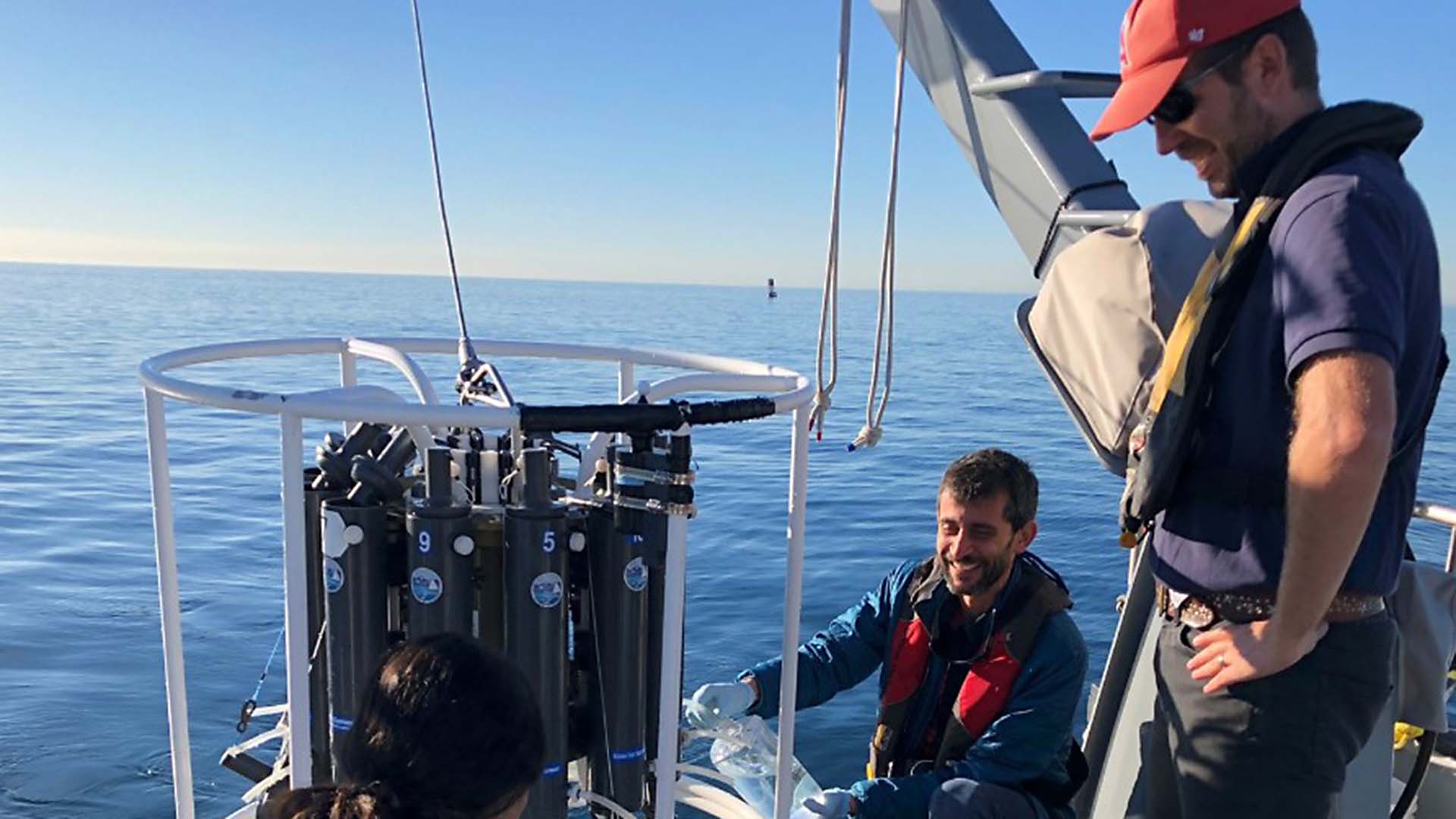
Adam Martiny’s own research integrates genomic analysis, large-scale ocean observations and biogeochemical modelling to understand how climate change affects marine ecosystems. He also coordinates Bio-GO-SHIP, an international programme focused on global biological observations of the world’s oceans.
How did you find your way into ocean science?
“I probably have a somewhat unusual story. Many ocean researchers talk about dreaming of the sea as children, spending time by the coast with their parents and so on. That was not the case for me,” says Adam Martiny.
“My PhD project focused on microbiology, and it was the bacteria that fascinated me, not the ocean. But later I met a researcher in Boston who worked on marine bacteria. Her research fascinated me, and that led me into marine microbiology.”
“For me, the bacteria might just as easily have lived somewhere else. However, over time the ocean itself became increasingly interesting. Today, both the ocean and the microorganisms drive my research.”
Why is ocean research important?
“Denmark is surrounded by the sea, so the marine environment plays a major role in our climate, nature, resources and fisheries. My own focus, however, is primarily on the global oceans.”
Remarkably Little Is Known About Life in the Oceans
The ocean is a crucial component of the Earth’s climate system. It acts as a kind of thermostat and plays an enormous role in the global carbon cycle. At the same time, we still know surprisingly little about life beneath the waves, Adam Martiny emphasizes:
“When it comes to biodiversity, there are large groups of marine organisms that we have not yet properly mapped. That is why we need far more observations and measurements in order to better understand how climate change affects marine ecosystems.”
Are you an optimist or a pessimist when it comes to climate change?
“I would say that I am both concerned and hopeful. During my 23 years in the United States, it was repeatedly discouraging to see scientific facts dismissed by otherwise reasonable people around me, with the debate still focusing on whether there is even a climate crisis.”
“At the same time, atmospheric CO₂ concentrations continue to increase very rapidly, and it is difficult not to be concerned by that.”
“On the other hand, we are also seeing major progress. Renewable energy continues to become cheaper, and the transition is moving faster in many parts of the world. That gives reason for optimism. In Europe, I feel there is a much stronger understanding of the seriousness of our role and responsibility in addressing climate change. Here, the debate is more about how we should act.”
Family Time, Vegetable Gardening and Walking the Dogs
Adam Martiny has moved back to Denmark with his American wife. She is also a researcher and has taken up a position at DTU Bioengineering. Jennifer and Adam Martiny have two children.
“One thing I am particularly looking forward to is going to football matches and following sport with my son once we have settled in,” says Adam Martiny.
“I am also looking forward to spending more time with my family. I have two children, five siblings and many relatives in Denmark, so it is wonderful to be closer to them again.”
What else do you enjoy doing when you are not at work?
“I am very fond of the Danish countryside. A perfect Sunday is a long walk somewhere beautiful with my two dogs. What breed are they? Well, I honestly do not know. We adopted them from a shelter in the United States.
“It will be wonderful to have a house and garden again. I enjoy growing things that can be eaten. A kitchen garden interests me far more than flower beds,” Adam Martiny concludes.
About the Section for Ocean Science & Technology
The section that Adam Martiny now leads at DTU Aqua adopted its current name when he took up the position – The Section for Ocean Science & Technology was formed through the merger of the former Section for Oceans and the Arctic and the Centre for Ocean Life.
Read more about DTU Aqua’s research in oceanography and the Section for Ocean Science and Technology on the DTU Aqua website.
Contact
Adam Martiny Professor, Head of Section National Institute of Aquatic Resources Mobile: +45 93511639 acamar@aqua.dtu.dk