Survey
Dana on a survey in the Baltic Sea
The research vessel Dana is in the Baltic Sea to collect data on fish stocks.
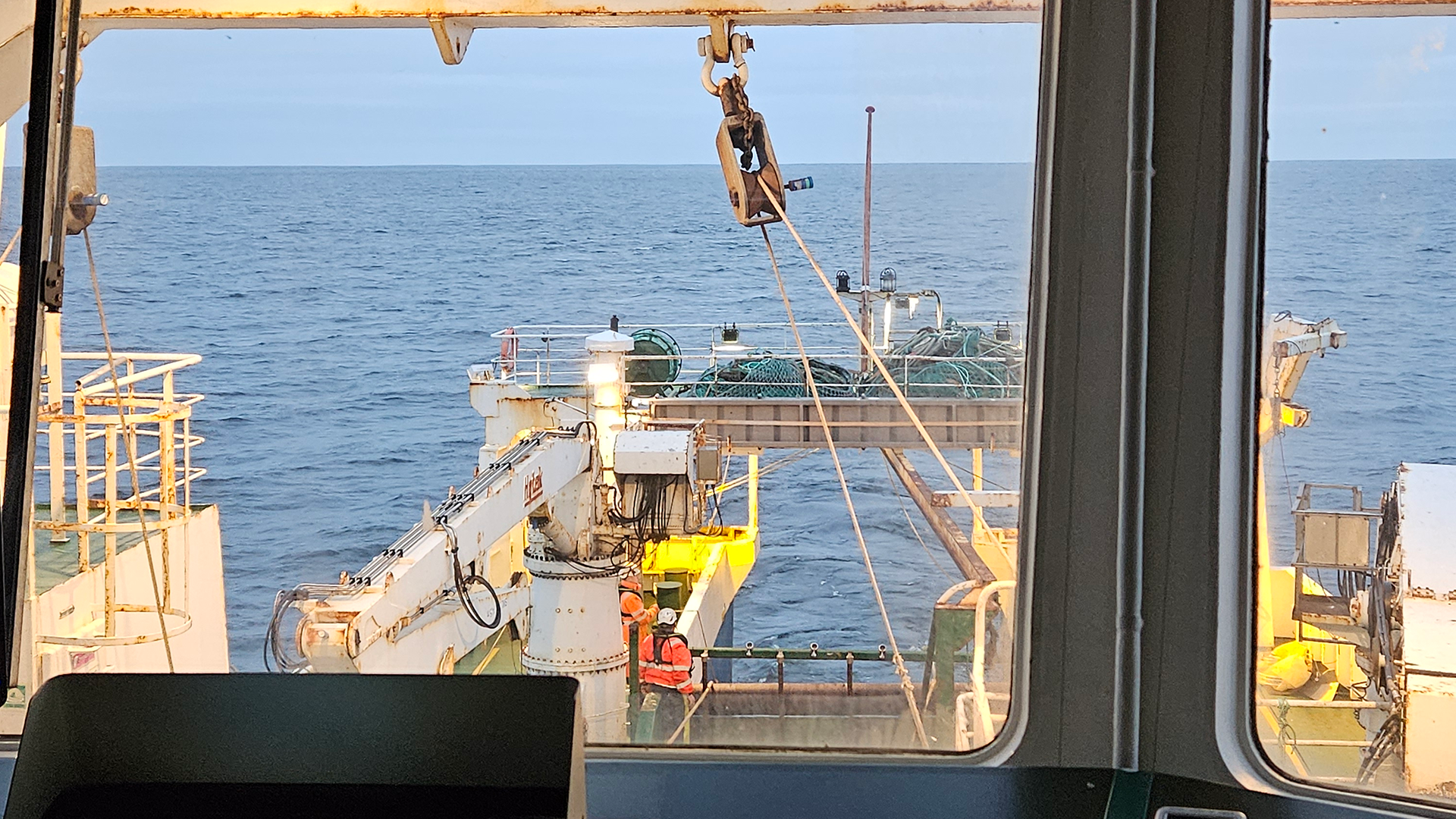
From 4-21 March 2026, the research vessel Dana is on the Baltic International Trawl Survey (BITS) in the Baltic Sea. The BITS cruises are coordinated by the International Council for the Exploration of the Sea (ICES) and conducted by research institutes from countries around the Baltic Sea, including Denmark.
The cruise is conducted twice a year in Q1 and Q4. The Danish part of the cruise primarily covers the central Baltic Sea.
Which data is collected?
The main purpose of the survey is to study the status of fish stocks, with a particular focus on benthic fish species such as cod, plaice, dab and flounder. In addition, data on the amounts and types of marine litter is collected. As a new initiative, it has been decided internationally that the most common benthic species, such as Baltic mussels, starfish, and shore crabs, should also be registered.
Depth-stratified trawls are carried out and paired with acoustic and hydrographic measurements of e.g. oxygen conditions, salinity and temperature of the sea water.
The survey is experimenting with reducing fishing time at each station in order to minimize the impact on the seabed and catch fewer fish.
Catches are categorized by species and length. For some species, samples are also taken to determine age, sex, maturity and weight. In recent years, cod genetics have also been studied to determine whether this is an indigenous ‘eastern cod’ or whether the cod have migrated from the western Baltic Sea. In addition, the stomachs of both cod and turbot are brought ashore to examine what they have eaten and whether their food sources have changed over time.
Evenings and nights are utilized for special purposes such as studying the presence of fish larvae, the invasive Mneiopsis jellyfish as well as native jellyfish and plankton.
What is the data used for?
Data from the countries' cruises is collected and processed by ICES. The results are used for ICES' biological advice on the state of fish stocks in the Baltic Sea. The advice is targeted at authorities who use it as a basis for setting fishing quotas and other fishing regulations.
Data on marine litter is gathered in an international database at ICES and used to describe trends.
Where is Dana now?
ABOUT DANA
Dana is Denmark's largest research vessel and DTU Aqua's primary vessel.
Survey reports
Main results from BITS surveys are available in reports from DTU Aqua.
Contact
Marie Storr-Paulsen Head of Section National Institute of Aquatic Resources msp@aqua.dtu.dk