PhD at DTU Aqua
The PhD programme at DTU Aqua educates future researchers within the institute's research areas for a career in academia or business.
PhD students and projects at DTU Aqua within the research area Oceanography.

Title of PhD Project
The role of fish in carbon cycling and the impact of climate change
Background of the project
The Earth’s oceans play a crucial role in regulating the Earth’s climate system, absorbing approximately 30% of anthropogenic carbon emissions through the physical and biological carbon pump. In the biological pump, carbon dioxide (CO2) is initially fixed by phototrophic organisms, forming the foundation of the marine food webs. This fixed carbon can be transported to the deep ocean through particle sinking (e.g., aggregates, carcasses, and fecal pellets), organism vertical migration, and water movement where it can be stored for long periods, ranging from months to millennia. So far, most studies have focused on plankton’s role in the biological carbon pump, while our comprehension of the contributions of fish to the biological carbon pump remains largely uncertain.
About the project
This project aims to bridge this knowledge gap by applying the FishErIes Size and functional TYpe model (FEISTY) alongside earth system models to assess and quantify the role of fish in global ocean carbon cycles, as well as the effects of fishery and climate change. To accomplish the goals, the FEISTY model will be two-way, online coupled with biogeochemical models through the Framework for Aquatic Biogeochemical Models (FABM). We will utilize reconstructed global fishing data with historical fishing patterns and different emission scenarios to force the coupled models, to investigate how fish-mediated carbon fluxes and sequestration vary under various climate change scenarios and fishing scenarios from past to future.
Perspectives
We expect the project to significantly improve our comprehension of fish-mediated carbon flux and sequestration in marine carbon dynamics. We will offer a novel approach to investigating and quantifying fish-mediated carbon fluxes and sequestration through coupling with earth system models. Furthermore, this research will underscore the importance of sustainable fisheries management in maintaining carbon sequestration from fish, thus contributing to climate change mitigation strategies and corresponding policy decisions.
Supervisors
Ken H. Andersen and P. Daniël van Denderen (DTU Aqua)
Title of the PhD project
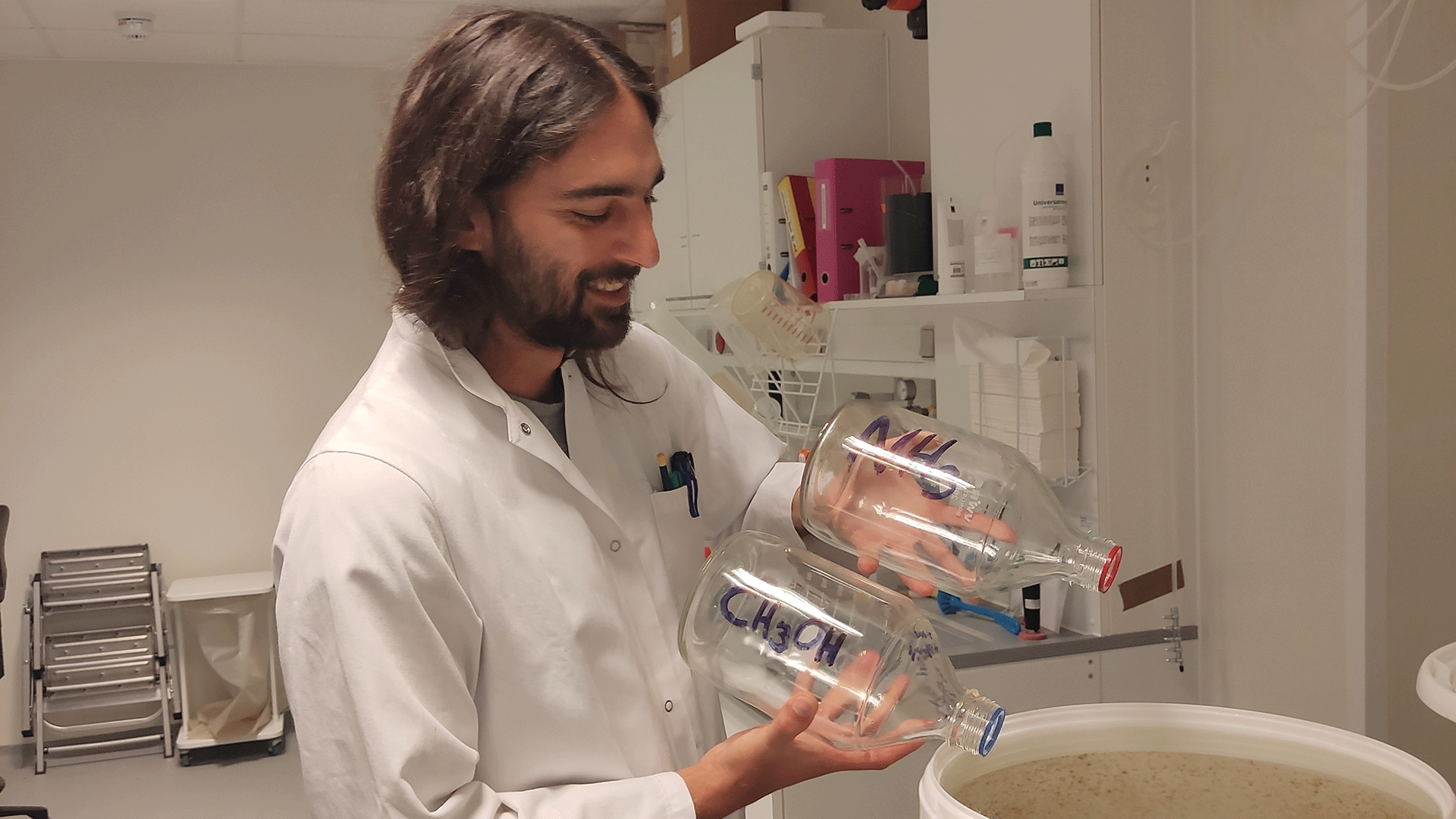
Ecosystem effects of maritime activities
Background of the project
The shipping industry is shifting to greener fuels, like ammonia (NH₃) and methanol (MeOH), following the instructions of the International Maritime Organization (IMO) to substantially reduce greenhouse gas (GHG) emissions. This shift imposes the risk of spilling these substances into the marine environment. The effects of NH₃ and MeOH on marine microbial life are not yet fully understood. Existing literature indicates potential adverse effects on marine food webs. However, plankton communities, especially in areas like the Baltic and North Seas, are not sufficiently studied. Given the significance of zooplankton in energy transfer within marine food webs, it is crucial to study their response to NH₃ and MeOH under different environmental conditions.
About the project
During my PhD, I will collaborate with experts from Danish and Swedish universities. We will conduct sampling surveys to assess current conditions in the Baltic and North Seas, focusing on environmental parameters and zooplankton community composition. Subsequently, I will perform ecotoxicology experiments by introducing ammonia and methanol under various environmental gradients to simulate changing conditions in these areas. Finally, I will implement the results to create computational numerical models to be used in environmental impact and risk assessments.
Perspectives
Copepods play a crucial role in energy transfer and greatly contribute to ecosystem services. My project aims to understand and explain the toxicity mechanisms of ammonia and methanol on copepods under different environmental conditions. The knowledge produced by this PhD will help us understand the ecosystem effects of the energy transition in the shipping industry. Additionally, I will develop numerical tools that can be used in future ecotoxicology studies.
Supervisors
Marja Koski and Sinja Rist, DTU Aqua and Ida-Maja Hassellöv, Chalmers University
Title of the PhD project
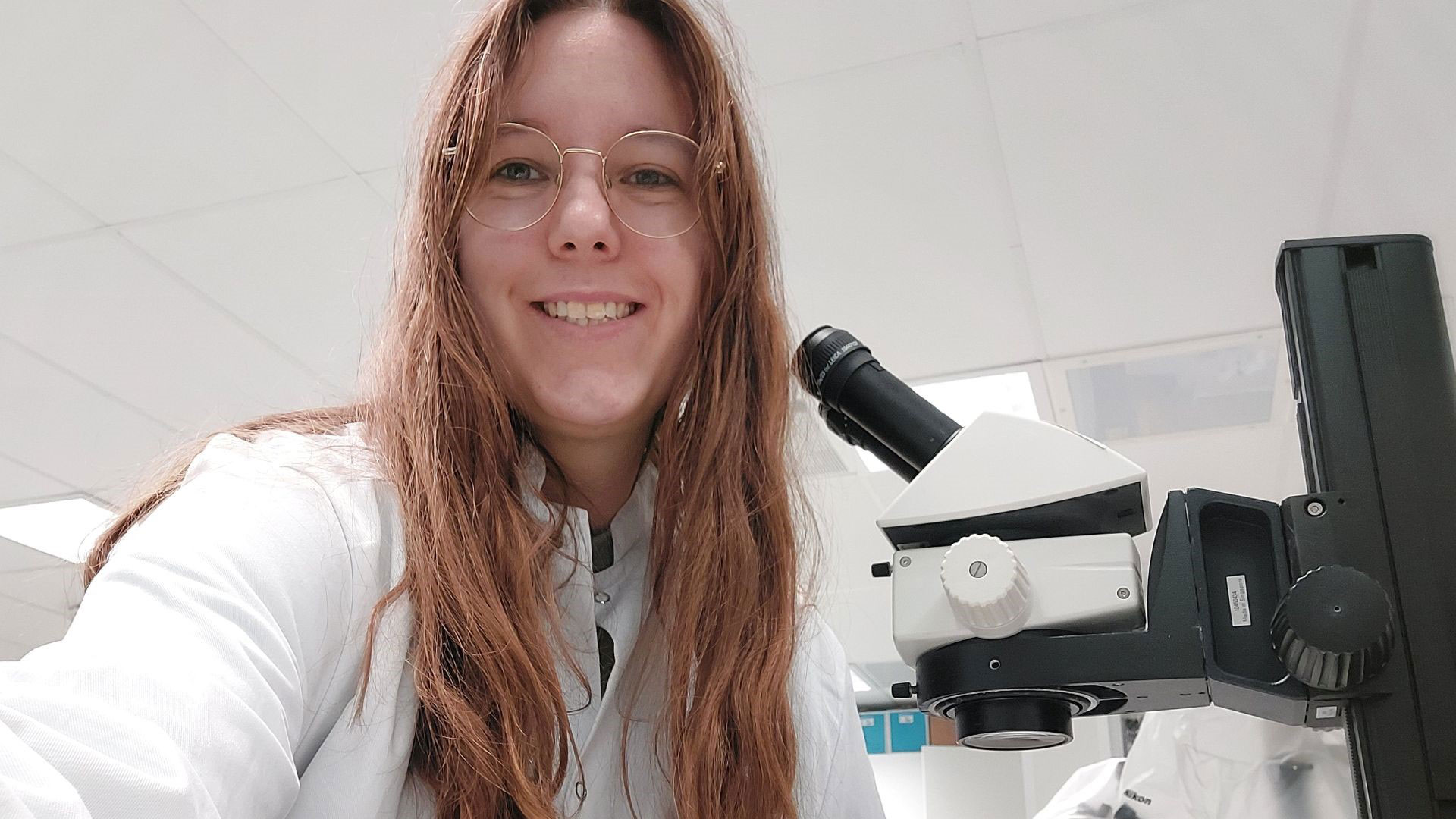
Linking pressure from mixture toxicity of shipping discharges to loss of biodiversity in the marine environment
Background of the project
Ships produce various types of waste water from the machinery, fuel, showers, dishwater etc. The waste water is often released into the ocean and can contain excess nutrients, heavy metals, polycyclic aromatic hydrocarbons (PAHs) among other things. These contaminants can alter the marine ecosystem by affecting the species involved by reducing reproduction and survival. Worldwide, research has mainly focused on understanding the impacts of individual contaminants with occasional studies on two pollutants, but studies on multiple contaminants are scarce. Furthermore, climate change is also considered a stressor that can potentially influence the effects and toxicity of pollutants; therefore, it should also be considered in the context of multiple stressors. The current challenge lies in developing a realistic method to determine the impacts of multiple stressors, which can then guide management decisions.
About the project
During this PhD project, I aim to contribute to improved understanding of how shipping discharges impact marine biodiversity at the base of the food web through mixture toxicity. The main focus will be on assessing the cumulative effects of contaminants and their interactions with climate change through a combination of multiple stressor experiments, chemical analysis of contaminants and damage modeling. The PhD aims to create a damage modeling framework that quantifies the environmental effects of shipping activities on marine environments.
Perspectives
My project aims to understand the environmental impacts of shipping discharges by conducting ecotoxicological experiments on copepods using multiple stressors. These results will be used in a damage modeling framework used to model the impact of shipping on marine ecosystems and their services. This can hopefully be used in maritime spatial planning and promote sustainable shipping practices.
Supervisors
Marja Koski, DTU Aqua & Kai Tang, DTU Sustain & Michael Zwicky Hauschild, DTU Centre for Absolute Sustainability.

Title of the PhD project
Biogeochemistry of Greenlandic waters
Background of the project
Greenlandic waters play a crucial role in global climate regulation, contributing to ocean circulation, carbon cycling, and biological productivity. In fact, this region houses some of the most productive areas of the Arctic, largely driven by phytoplankton communities. These communities vary in terms of both size and composition, which impact the efficiency of the food web and in turn the biological pump.
About the project
Despite the region's ecological significance, the underlying mechanisms driving productivity remain relatively poorly understood, due to the remoteness and logistical challenges. A main goal of this research is to investigate processes that modulate local and regional variability of primary productivity in West- and East Greenlandic waters, with a focus on understanding the influence of oceanographic features across these regions. In particular, phytoplankton composition - especially in terms of size classes - will be explored to examine how physical and biogeochemical factors contribute to spatial and temporal variability.
Perspectives
Results from this research will provide insight into the patterns of biogeochemical cycles related to primary production. This will be contextualized within a broader Arctic and global framework to improve our understanding of dynamics within lower levels in remote polar regions, that are known to be more susceptible to climate change. This will ultimately help improve future monitoring capabilities of this region.
Supervisors
Rafael Gonçalves-Araujo, DTU Aqua, Haraguchi Lumi, Finnish Environment Institute and Thomas Juul Pedersen, Greenland Institute of Natural Resources

Title of the PhD project
Plankton dynamics at the Davis Strait – Ecosystem tipping cascades in an Arctic gateway
Background of the project
West-Greenlandic waters are among the most productive marine areas in the arctic and is one of the main gateways of water exchange between the Arctic and Atlantic. The ecosystems found here are essential for the livelihoods of many Greenlanders and contributes substantially to the global carbon sequestration budget. Lipid-rich arctic zooplankton ensures efficient energy transfer of primary production to higher trophic levels; however, this might change because of climate change. Zooplankton are vulnerable to changes in their physical environment, and thus it has long been speculated that warming and freshening arctic oceans will result in phase-shifts to ecosystems dominated by smaller less lipid-rich boreal zooplankton species, with detrimental effects for the ecosystems. However, concrete evidence of such tipping points is lacking, and thus the aim of this project is to improve the knowledge and understanding of the current topic.
About the project
The current project aims to unravel relationships between climate change and zooplankton dynamics in Davis Strait through a combination of laboratory experiments, investigating temperature and salinity tolerances, field observations from cruises, and historical data from the Davis Strait Observatory and the Greenland Ecosystem monitoring program.
Perspectives
The results from this project will provide a mechanistic understanding of responses of smaller zooplankton to changes in their physical environment and extrapolate this knowledge to habitat models with the ability to understand current and predict future species’ distributions. This knowledge can then be used to predict consequences for entire ecosystems.
Supervisors
Torkel Gissel Nielsen, Marja Koski & Colin Stedmon, DTU Aqua, and Thomas Juul-Pedersen, Greenland Institute of Natural Resources.

Title of the PhD project
Observing gelatinous zooplankton in the face of climate change
Background of the project
In the face of climate change, it is important to understand how our ecosystems are affected. Zooplankton offers a lens to this understanding being a link in the food-web. Gelatinous zooplankton species (e.g. jellyfish and larvaceans) have traditionally been ‘invisible’ in our understanding of zooplankton, highly due to sampling challenges and their invisible transparency. Increasing recognition of their role in ecosystems are evident, together with stories of emerging abundances, now making it the time to find a way of reliantly observing the ‘invisible’.
About the project
In my PhD project, I work with novel technologies to observe plankton across the full size-spectrum (phytoplankton to macro-zooplankton), with a special focus on seeing gelatinous species. I use shadowgraph cameras to make the ‘invisible’ visible, and work on connecting optical data to other platforms such as acoustics, eDNA and environmental measurements (CTD) to get datasets highly valuable for climate change modelling. Further, I work with statistical ‘functional trait’ methods that investigate the mechanisms of zooplankton and how they will act with climate change. The overarching objectives of my work if thus, to 1) observe zooplankton communities including gelatinous species, 2) obtain data applicable for modelling, 3) analyze zooplankton biodiversity and distribution data in relation to climate change.
Perspectives
What functional role does gelatinous species play compared to crustaceans (e.g., copepods) in shared and non-shared communities? How do the functional traits of zooplankton (including gelatinous species) connect to environmental changes we can relate to climate change? Are specific functional traits the reason for gelatinous species to be ‘the winner of climate change’? Can we use traits to predict future ecosystems? These are the key questions I wish to answer. To answer them, data on zooplankton communities including gelatinous species is needed.
Supervisors
Cornelia Jaspers & Martin Lindegren, DTU Aqua, and Russell Hopcroft, University of Alaska Fairbanks.
Presentations of the PhD projects will follow.
The PhD programme at DTU Aqua educates future researchers within the institute's research areas for a career in academia or business.
Thøger Engelund Knudsen
Collective fish migration and population dynamics (link awaits publication of thesis)
Athanasios Kandylas
Carbon sequestration and oxygen minimum zones in the ocean
Magnus Heide Andreasen
Global change and invasive jellyfish. Hypoxia, fish predation and ecosystem effects
Caroline Gjelstrup
Changing oceanographic conditions in East Greenland
Federica Miano
Fluid dynamics, ecology, and evolution of marine flagellates. Motility, foraging mechanisms, and defense strategies
Kristian Maar
Ecology and fluid dynamics of aquatic suspension feeders
Delove Abraham Asiedu
Effect and bioaccumulation of mercury in Arctic marine plankton under climate change
Gunaalan Kuddithamby
Microplastics in marine waters and their potential risk to marine plankton
Sei Suzuki-Tellier
Feeding mechanisms in phagotrophic nanoflagellates. Predation in the Low Reynolds Number World
Anders Dalhoff Bruhn
Terrestrial and coloured dissolved organic matter in Arctic waters: Towards in-situ sensor based monitoring of Arctic-Atlantic organic carbon exchange at major Arctic gateways
Josephine Grønning
Defence in diatoms: mechanisms and trade-offs
Rocío Rodríguez Torres
Ingestion and effects of microplastics on marine planktonic food webs
Frederik Ryderheim
Opening the black box on predator-induced phytoplankton defenses: mechanisms, traits, and trade-offs
Jérôme Pinti
Vertical Migration: Structure and function of pelagic ecosystems
Agnethe Nøhr Hansen
Plankton Trait Ecology in a Changing Marine Environment
Marina Pancic Mohr
Defense mechanisms in phytoplankton: traits and trade-offs
Kirstine Toxværd
Effects of oil spills on Arctic pelagic ecosystems—Winter exposure and variations in sensitivity
Jiayi Xu
Prey selection and behavior of copepods fed on toxic and nontoxic algae
Anette Maria Christensen
Marine copepods in the Baltic Sea – physiological responses and adaptation to low salinity
Nicolas Azaña Schnedler-Meyer
The lives and times of jellyfish: Modelling the population dynamics and ecological role of jellyfish in marine pelagic ecosystems
Hans van Someren Gréve
Zooplankton Motile Behavior: Traits and trade-offs in planktonic copepods
Evandro Malanski
Early life of key fish species, capelin Mallotus villosus and Atlantic cod Gadus morhua, in West Greenland
Arief Rullyanto
Deep water overflow in the Faroe Bank Channel; Modelling, processes, and impact
Ana Sofia Ferreira
A time for every season: seasonal cycles of plankton and fish
Karen Riisgaard
Trophic role of protozooplankton in northern marine ecosystems
Mette Dalgaard Agersted
Functional biology and ecological role of krill in Northern marine ecosystems
Sanne Kjellerup
Population dynamic of high latitude copepods - with emphasis on Metridia longa
Mie Hylstofte Sichlau
Sexual selection in marine plankton
Julie Sainmont
Strategies for success: Copepods in a seasonal world
Rasmus Swalethorp
Early life of inshore fishes in Greenland with emphasis on Atlantic cod (Gadus morhua)