Population Dynamics and Stock Assessments
DTU Aqua develops and applies methods that integrate fish biology, ecological processes, and stock assessments to support sustainable fisheries management. By combining field observations, laboratory analyses, long-term time series, and process-based models, we generate new knowledge about the dynamics of fish stocks.
Research in population dynamics and stock assessments
DTU Aqua’s research in population dynamics and stock assessments combines process models with data to understand the mechanisms that shape fish populations.
This improves the models used to assess fish stocks, predict future developments and support advice on fisheries and marine ecosystems.
Research Coordinator
Stefan Neuenfeldt Senior Researcher National Institute of Aquatic Resources Mobile: +45 22755815 stn@aqua.dtu.dk
Effective management of marine fish stocks relies on scientific tools that can predict all aspects of the population dynamics—central competencies within DTU Aqua’s research in population dynamics and stock assessment.
Population dynamics cover recruitment, growth, mortality, migration and spatial distribution, population structure, reproduction, species interaction, and environmental impact.
The need for these tools is increasing as fisheries and environmental management move toward ecosystem-based approaches. Management now requires operational models and sustainability indicators that reflect the current state of fish populations, their rate of change and their responses to climate change, fishing pressure and species interactions.
Likewise, society’s need for scientific tools capable of modelling recruitment, species interactions, and spatial dynamics increases as the EU Common Fisheries Policy (CFP) is shifting from single-species management to fisheries management plans that incorporate species interactions.
In addition, the EU Marine Strategy Framework Directive (MSFD) and the HELCOM Baltic Sea Action Plan require knowledge on how fisheries influence lower trophic levels and nutrient dynamics through changes in the food web.
As some North Atlantic fish stocks grow and shift northward, the need for management strategies that keep pace with ecological change will only increase.
The research area Population Dynamics and Stock Assessments combines several types of evidence: models of biological and ecological processes, observations of fish behaviour, chronological information stored in otoliths and survey data on spatial distributions. Together, these data sources help explain how fish populations move, grow and respond to natural and human pressures.
The objective is to improve the mechanistic understanding of migrations, natural mortality, and growth of marine fishes. Our work is supported by access to research surveys, laboratories, databases, and long-term monitoring programmes.
We also contribute to scientific advice by translating population-dynamic knowledge into assessments, forecasts and management-relevant indicators. This connection between research and advice is central to our role in supporting sustainable use of marine resources.
Our geographical focus is on the Baltic Sea and the North Sea, but we also work with the North Atlantic and Greenlandic waters.
Sub-areas
The research area includes three sub-areas:
Behaviour and interactions
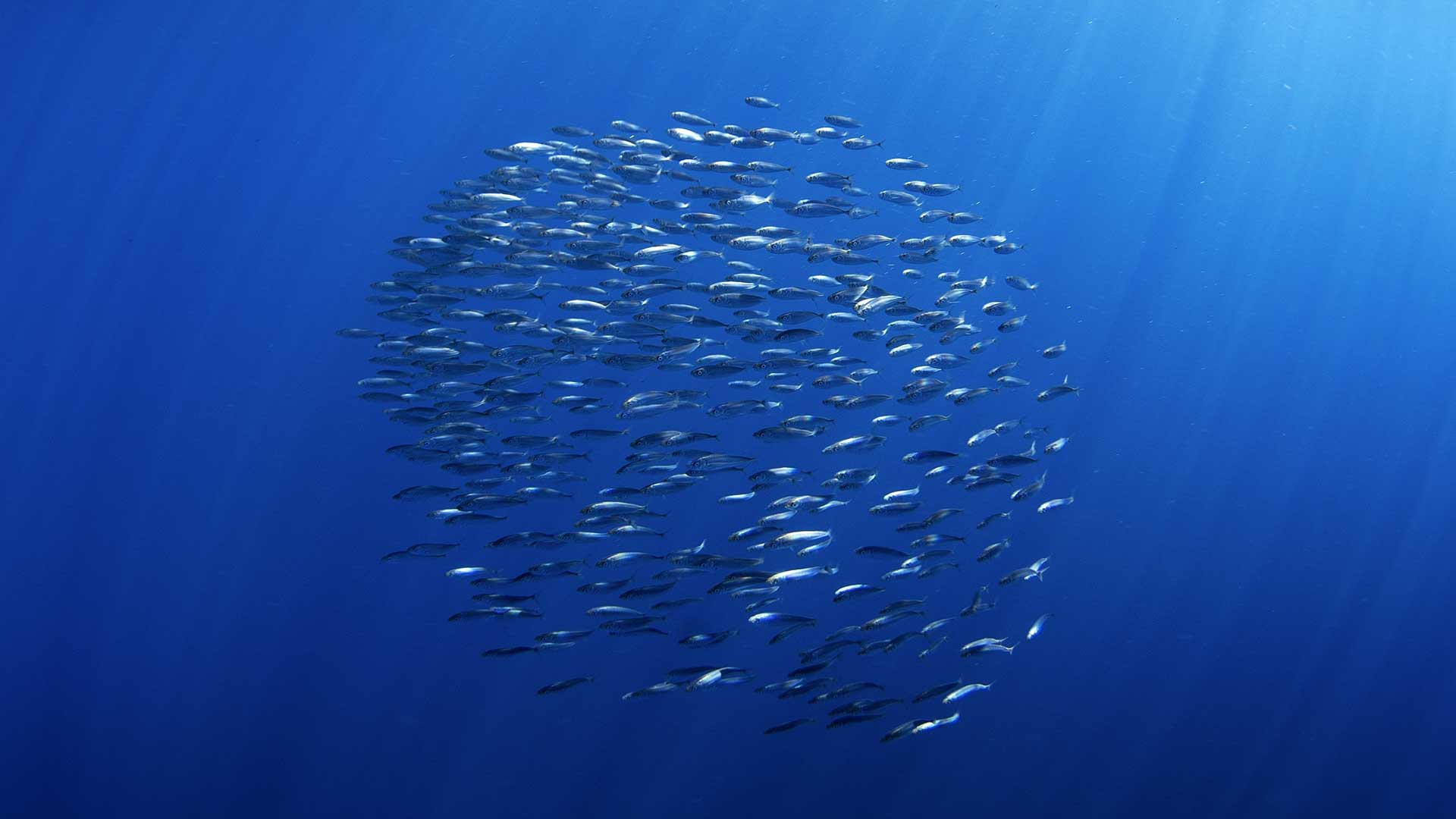
The research focuses on measuring and modelling how often fish encounter zooplankton and other fish (encounter rates) and the consequences of collective behaviour for the dynamics of forage fish populations and growth of their predators. This involves acoustic tracking of individuals during e.g. diel vertical migrations and applying fish stomach data to model successful encounter rates, consumption rates and feeding periodicity.
Contact
Stefan Neuenfeldt Senior Researcher stn@aqua.dtu.dk
Environment and biological processes
The research aims to understand how physical and chemical properties of the environment interact with biological processes to regulate otolith (ear stone) biomineralization and chemical composition. The chronological information stored in the otoliths is used to infer knowledge on fish growth, habitat use and movement.
Contact
Karin Hüssy Professor kh@aqua.dtu.dk
Fish in the Arctic
The research examines population dynamics and assesses the status and future development of commercially important fish stocks and related fisheries in Greenlandic waters. This involves research in population ecology such as stock structure, migration, feeding ecology, behaviour and key population dynamic rates, e.g. fecundity, growth and recruitment.Contact
Teunis Jansen Professor tej@aqua.dtu.dk
The research area Population Dynamics and Stock Assessments provides scientific knowledge for managing sustainable fisheries under rapidly changing environmental conditions, e.g. on interaction rates, changes in spatial distribution of key resources, or patterns in body growth.
Our research enables society to evaluate and forecast how climate change, fishing pressure, eutrophication and other human activities affect food webs, fish populations, and biodiversity.
We contribute directly to stock assessments in the North Sea, the Baltic Sea, Inner Danish Waters and Greenlandic waters, as well as to multispecies fisheries management plans. Our operational outputs also support marine spatial planning, for example by identifying suitable locations for protected areas.
In addition, we contribute to advancing sustainable fishing practices by collaborating with the fishing industry in research and innovation projects, including studies of fish spatial distribution that integrate fishers’ data, such as sonar information.
External collaboration
The research area Population Dynamics and Stock Assessments contributes to European and international research programmes as well as national projects.
Our main partners are the large fisheries research institutes, for example
- Greenland Institute of Natural Resources
- Institute of Marine Research
- The Thünen-Institute
- Ifremer
- CEFAS—Centre for Environment Fisheries and Aquaculture Science
- AZTI
- Spanish Institute of Oceanography (IEO)
We collaborate with the fishing industry on innovation and research aimed at improving sustainability in the sector.
Internal collaboration
Internally at DTU Aqua, we mainly collaborate with the following research areas:
- Observation Technology
- Modelling of Aquatic Systems
- Fish Stocks and their Habitats
- Marine Biodiversity and Human Pressures
- Fish Biology
- Fisheries Technology
Projects, publications & people
Organization
The research area is organizationally affiliated with: